2026 Top Nicotinamide Adenine Dinucleotide Suppliers?
Choosing the 2026 top Nicotinamide Adenine Dinucleotide suppliers requires more than comparing website prices. Product quality can vary between grades, production lots, and intended applications. A dependable supplier should provide clear specifications, batch-specific certificates of analysis, and practical storage guidance.
This introduction examines suppliers through an evidence-based purchasing lens. It considers manufacturing experience, analytical testing, documentation, supply continuity, and customer support. Important details include assay results, moisture limits, microbial controls, packaging protection, and stated shelf life. For research laboratories, these details can influence repeatability at the bench. For manufacturers, they may affect validation, inventory planning, and production risk.
Look for independent verification.
Supplier rankings should remain transparent and cautious. A polished catalog does not prove technical reliability. Stronger evidence may come from traceable batch records, recognized quality systems, responsive technical teams, and consistent delivery history. Regulatory expectations also differ by country and product use, so readers should confirm current requirements with qualified professionals before purchasing. This guide does not treat one certification as universal proof of quality. That would be too simple.
No list is flawless.
The 2026 market may change quickly as capacity, pricing, and documentation improve. Therefore, each supplier should be reassessed using current records rather than old reputation alone. The goal is not to promote the largest company. It is to identify credible partners that communicate clearly, support responsible use, and provide verifiable product information.
What Is Nicotinamide Adenine Dinucleotide (NAD)?
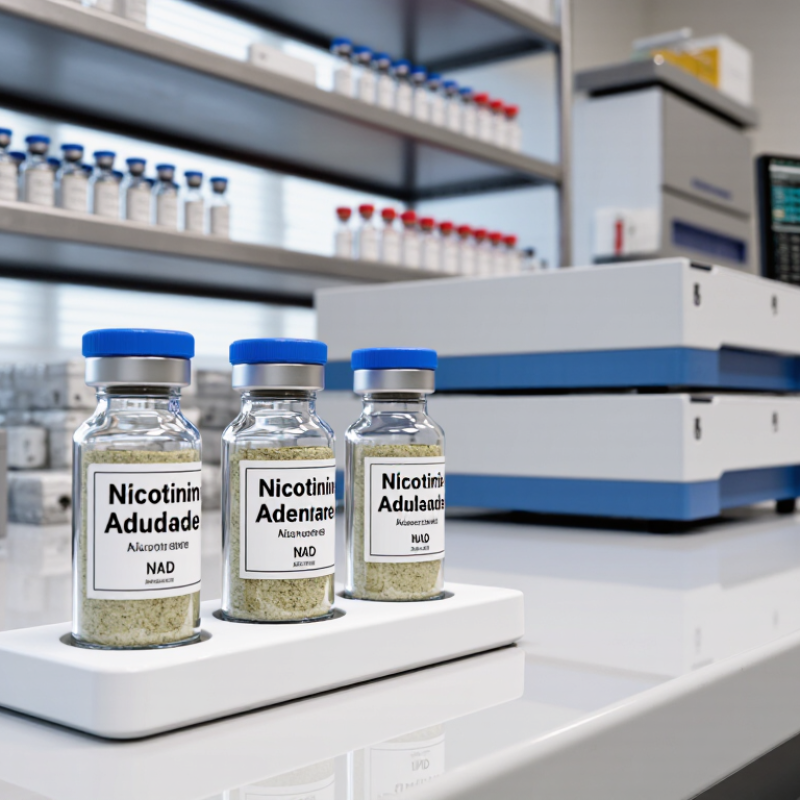
Nicotinamide adenine dinucleotide, or NAD, is a naturally occurring coenzyme found in nearly every living cell. It helps convert nutrients into usable cellular energy. NAD also supports reactions involving DNA repair, gene regulation, and cellular stress responses. Its chemistry is simple but important: NAD accepts electrons and becomes NADH, then returns to its original form. This repeated cycle works like a small shuttle inside mitochondria. Without it, energy production becomes less efficient.
Scientific reviews in Nature Reviews Molecular Cell Biology and Cell Metabolism describe NAD as a central metabolic regulator, not merely an energy ingredient. Research reports also show that NAD availability may decline in several tissues during aging, although the size of this decline varies by tissue, study design, and health status. That uncertainty matters. A single percentage should not represent every person.
Professional market analyses published in 2024 project continued growth in the NAD-related ingredient sector, driven by interest in healthy aging and metabolic research. Market growth, however, does not prove clinical effectiveness. Laboratory findings may not translate directly to oral products or human outcomes. I would examine the NAD form, purity testing, stability data, and human trial design before judging any supplier. The label can look precise. The biology is less tidy.
How NAD Suppliers Are Evaluated in 2026
In 2026, NAD suppliers should be evaluated by evidence, not market excitement. Grand View Research’s 2024 analysis projects double-digit growth for the NAD+ market through 2030. Growth alone proves little. A reliable supplier should provide batch-specific identity testing, assay results, impurity profiles, and stability data. HPLC or LC-MS results are more useful than a polished brochure. NAD materials can degrade with heat, light, and moisture, so storage records matter.
Manufacturing controls also deserve close review. WHO good manufacturing practice guidance emphasizes traceability, validated processes, sanitation, and documented quality systems. Ask for independent laboratory reports, microbial testing, heavy-metal screening, residual-solvent data, and change-control records. Check whether the certificate of analysis matches the actual lot number. In practical audits, this small detail often exposes weak documentation. A certificate is not proof by itself.
Tips: Request three recent batches, not one sample. Compare assay variation and impurity trends. Ask for real-time stability results, not only accelerated testing. Verify the laboratory’s accreditation and test method. A low price may reflect efficiency, but it may also hide weaker controls. I would not accept vague claims such as “pharmaceutical grade” without a recognized standard. Even experienced buyers can overvalue purity percentages. Supplier evaluation remains imperfect; transparent records and repeatable results provide stronger confidence.
NAD Quality, Safety, and Regulatory Standards
In 2026, leading NAD suppliers should be judged by evidence, not polished websites. The 2023 Council for Responsible Nutrition Consumer Survey reported that 74% of U.S. adults use dietary supplements. That scale increases the need for reliable testing. Suppliers should provide batch-specific certificates of analysis, not generic documents. Each report should identify NAD content through HPLC or LC-MS testing. It should also show limits for heavy metals, residual solvents, microbes, and unwanted by-products.
Safety begins with manufacturing controls. U.S. dietary supplement producers must follow FDA Current Good Manufacturing Practice requirements under 21 CFR Part 111. However, the NIH Office of Dietary Supplements notes that supplements are not approved for safety or effectiveness before marketing. A certificate alone is not proof. Buyers should check independent laboratory accreditation, sample traceability, packaging controls, and storage data. NAD can be sensitive to moisture, heat, and light, so stability testing should cover the full stated shelf life. The weak point is often expiry evidence. Many suppliers show release testing but provide little data from the final months. Regulatory acceptance also varies across jurisdictions. A serious supplier documents its ingredient identity, production site, change-control process, and adverse-event procedures. Some records may still be incomplete. That deserves scrutiny, not automatic trust.
2026 Top Nicotinamide Adenine Dinucleotide Suppliers? — NAD Quality, Safety, and Regulatory Standards
Molecular-mass reference for NAD-related ingredients used in supplier identity and purity verification
Molecular mass is a useful identity-control parameter, but it is not a supplier ranking or a complete quality score. NAD-related materials should also be verified with orthogonal methods such as HPLC or UPLC assay, mass spectrometry, spectroscopic identity testing, impurity profiling, residual-solvent testing, heavy-metal testing, microbiological testing, and stability studies. Regulatory review should consider the applicable market, intended use, current GMP expectations, validated analytical methods, certificates of analysis, and traceable batch records. Values shown are commonly cited molecular masses for the indicated chemical forms; salt and hydration states can change the reported mass.
How to Choose a Reliable NAD Supplier
Choosing a reliable NAD supplier in 2026 requires more than comparing prices. A professional supplier should provide clear specifications, recent certificates of analysis, and traceable batch numbers. Check whether testing confirms identity, purity, moisture, heavy metals, and microbial limits. Do not accept vague claims.
Ask how the material is manufactured and stored. NAD-related ingredients can be sensitive to heat, light, and humidity. A dependable supplier should explain packaging controls, storage temperatures, and transportation conditions. Look for documented quality systems, qualified laboratories, and independent testing. Experience matters here. Suppliers should answer technical questions without hiding behind sales language.
Request a sample before placing a large order. Review its appearance, documentation, and test results with a qualified laboratory when possible. Compare the supplier’s results with your own verification. Small discrepancies deserve attention. No supplier is perfect, and paperwork can contain mistakes. That is why ongoing audits, complaint records, and corrective-action procedures matter. Check regulatory suitability for your target market, since acceptable uses and labeling rules may differ. Reliability is shown through consistent batches, honest communication, and evidence that remains available after payment.